An upstream approach to cement decarbonization
CURA Marks One Year Since Emerging from Stealth
First-year milestones include an operational mini-pilot, US$10 million financing, major industry collaborations, and international recognition for its cement decarbonization technology.
CALGARY, Alberta — November 10, 2026 — One year after emerging from stealth on November 4, 2025, CURA Climate Inc. (“CURA”) is marking a year of significant progress in developing its electrochemical technology to decarbonize cement production, one of the world's most emissions-intensive industries.
Over the past 12 months, CURA has advanced its technology from laboratory research to integrated pilot operations, established collaborations with leading cement and construction companies, secured new financing and laid the groundwork for commercial-scale deployment. The company has also gained international recognition for its technology and commercial potential.
Key milestones from CURA's first year include:
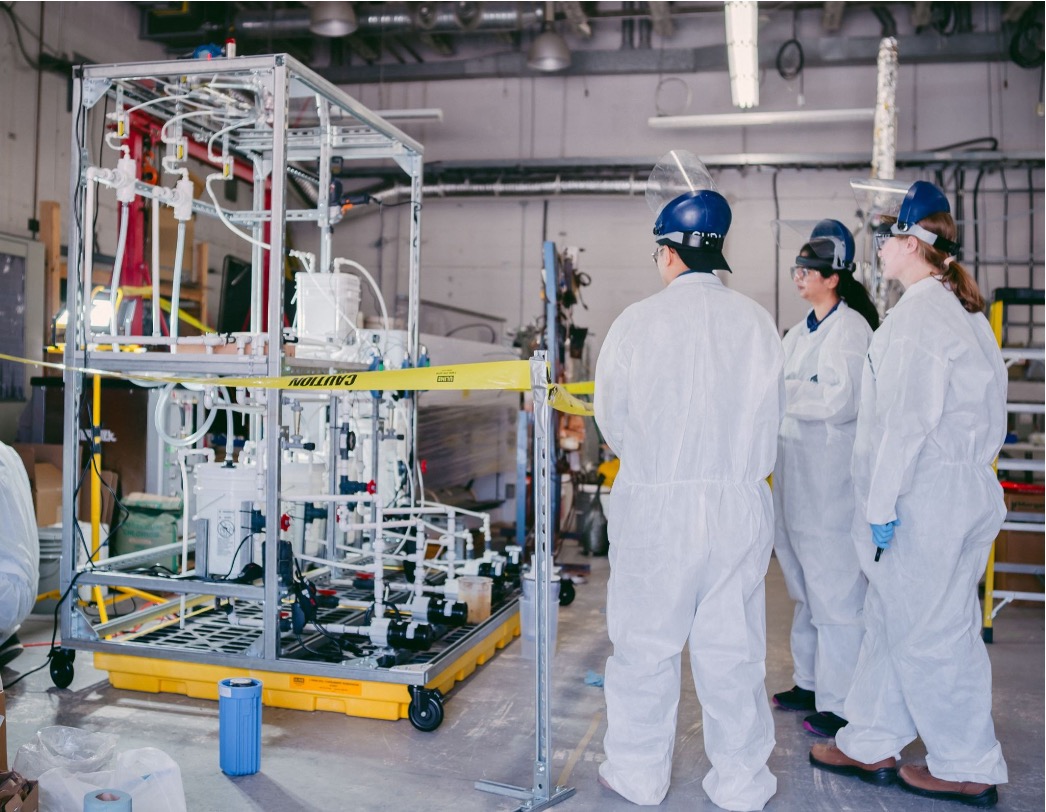
- Commissioning its first operational mini-pilot. Within 8 months, CURA announced the successful commissioning of its 5-kilogram-per-day mini-pilot, its first integrated operating system outside the lab. The facility produces material that has been sent out for customer and partner testing while generating essential operating data to support larger-scale deployment.
- Establishing major industry collaborations. CURA signed eight MOUs with leading cement producers, engineering companies and infrastructure developers, including TITAN Group, ACCIONA, Aecon, and Fast + Epp. These relationships support material testing, technical validation and the evaluation of opportunities to integrate CURA's technology into existing cement production and construction applications.
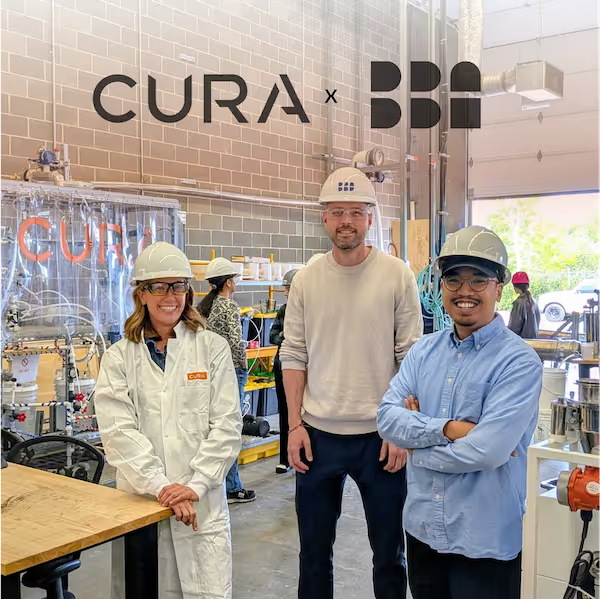
- Advancing plans for commercial-scale deployment. CURA worked with AGEIAS on its mini-pilot, is partnering with Exergy and Grand Forks Concrete on its planned 100-tonne-per-year pilot in Taber, Alberta, and selected BBA Consultants to lead conceptual engineering for its first commercial demonstration facility, designed to produce at least 30,000 tonnes of decarbonized cement annually. Together, these projects establish a staged pathway to validate the technology at increasing scales.
- Securing US$10 million in financing. In September, CURA announced US$10 million in financing led by Zacua Ventures, with participation from Sandpiper Ventures, Amplify Capital and Vantage Futures. The investment supports construction and commissioning of the Taber pilot, engineering for the commercial demonstration facility and team expansion. Additional non-dilutive funding from NorthX and Alberta Innovates has supported CURA's technical development and scale-up activities.
- Gaining international recognition for its technology and commercial potential. CURA won the 2026 Web Summit Vancouver PITCH Competition, was named a top 100 finalist in the Hello Tomorrow Global Challenge and a top 20 semifinalist in the Slush 100 competition. The company was also named to Foresight Canada's 2026 Foresight 50, STATION F's Future 40, Cleantech Group's 2026 Cleantech 50 to Watch and CEMEX Ventures' Cleantech Construction Map 2026.
- Attracting national and international media coverage. CURA's technology, industry partnerships and commercial plans were featured in media coverage by Global News, BetaKit and S&P Global, as well as international cement industry publications including Global Cement and International Cement Review. Coverage has highlighted CURA's approach to reducing cement emissions and its progress toward commercial deployment.
"I'm incredibly proud of what our team has accomplished in our first year," said Erin Bobicki, Co-founder and CEO of CURA. "We've built momentum by focusing on execution, being transparent about what we're learning, and getting things built. The challenges get harder as we scale, and that's exactly where we want to be. Over the next year, we'll get our pilot operational, generate the data needed to demonstrate performance and economics at scale, and continue advancing toward deployment of our first 30,000-tonne-per-year commercial unit. We've proven we can execute. Now it’s about executing at scale."
Cement production accounts for approximately 8% of global CO₂ emissions, with a significant portion released when limestone is calcined to make cement. CURA's electrochemical technology addresses these emissions at their source, using electricity to process limestone before it enters the cement kiln and producing a concentrated CO₂ stream for capture and storage or use. Designed to integrate with existing cement manufacturing operations, the technology has the potential to reduce cement emissions by up to 85%.
As CURA enters its second year, its priorities include advancing the Taber pilot, generating the operating and validation data required by industrial partners, converting our MOUs into commercial contracts, and progressing engineering for its first commercial demonstration facility. These next steps will be critical to demonstrating the technology's performance and economics at the scale required for wider industry adoption.