An upstream approach to cement decarbonization
CURA Selects BBA Engineering to Lead Conceptual Design Study for Commercial Decarbonized Cement Demonstration Facility
Calgary, AB — CURA has selected leading Canadian engineering and climate consultants BBA Consultants as its engineering partner for a pre-feasibility (FEL-1) conceptual design study for CURA's first commercial demonstration facility, to be developed in partnership with Grand Forks Concrete (GFC).
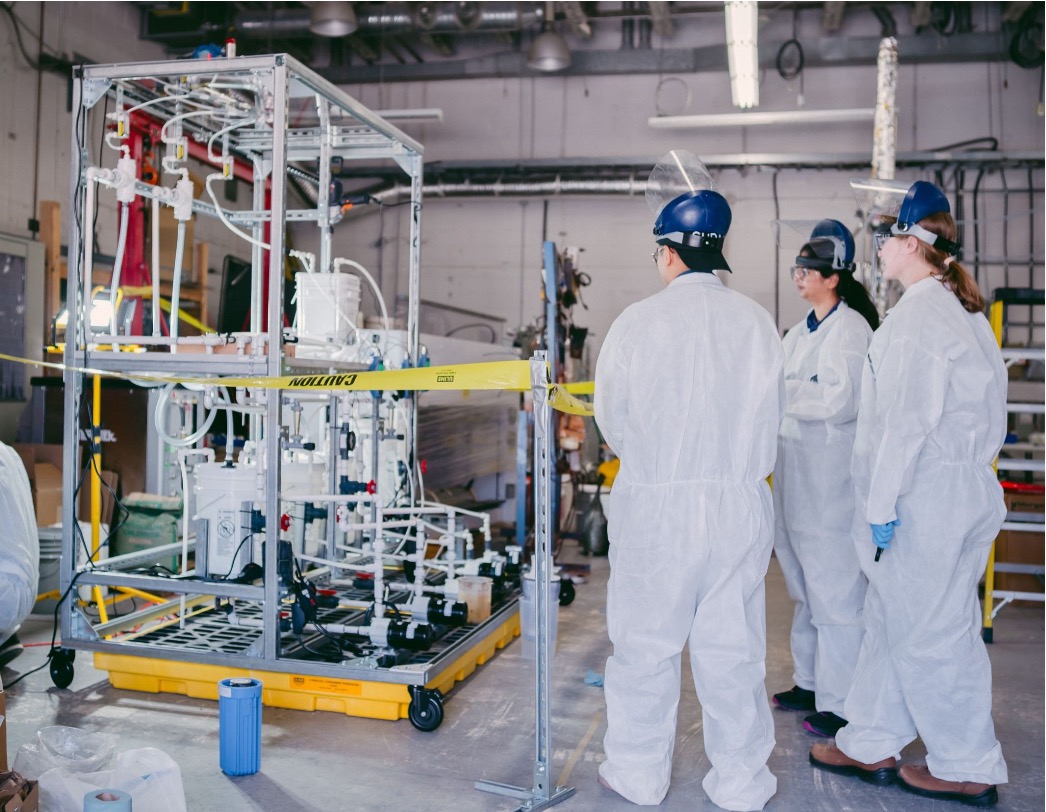
The facility will process spent agricultural lime — a low-cost, regionally available feedstock — and convert it into decarbonized cement through CURA's proprietary electrochemical process. The demonstration plant is designed to produce at least 30,000 tonnes of decarbonized cement per year, with capacity potentially increasing further as the project definition matures.
This engagement marks a significant step in CURA's commercialization pathway, translating rapid bench-scale and pilot development into a pre-commercial industrial facility. The project will establish the engineering basis required to advance toward detailed design and construction.
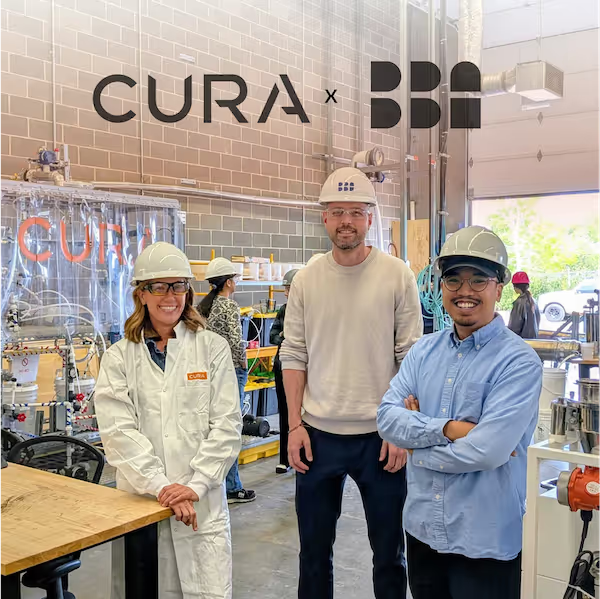
BBA brings deep expertise directly relevant to this challenge, with a strong portfolio spanning carbon capture and utilization, electrified industrial processes, technology scale-up, and balance-of-plant engineering for first-of-kind facilities. Their team has supported landmark decarbonization projects across Canada, including work with Carbon Engineering, Mangrove Lithium, and Deep Sky, and brings specialized knowledge in electrochemical systems, corrosive chemical handling, and CO₂ management — all central to CURA's process.
"Cement is one of the hardest sectors to decarbonize, and CURA is building the technology to change that," said Phil De Luna, CTO and Co-Founder of CURA Climate. "Partnering with BBA gives us the engineering rigour and industrial experience to turn our pilot results into a facility that proves this technology at commercial scale."
CURA's electrochemical approach offers a fundamentally different path to decarbonizing cement production, one that captures CO₂ rather than emitting it, and is compatible with existing limestone and lime feedstocks. The Grand Forks Concrete facility will serve as a critical validation step ahead of broader commercial deployment.